Considering a career in dispute resolution? You’re onto something.
Helping people find resolutions to their problems – strategically and cost-effectively – is stimulating and rewarding work.
But how do you get into the field?
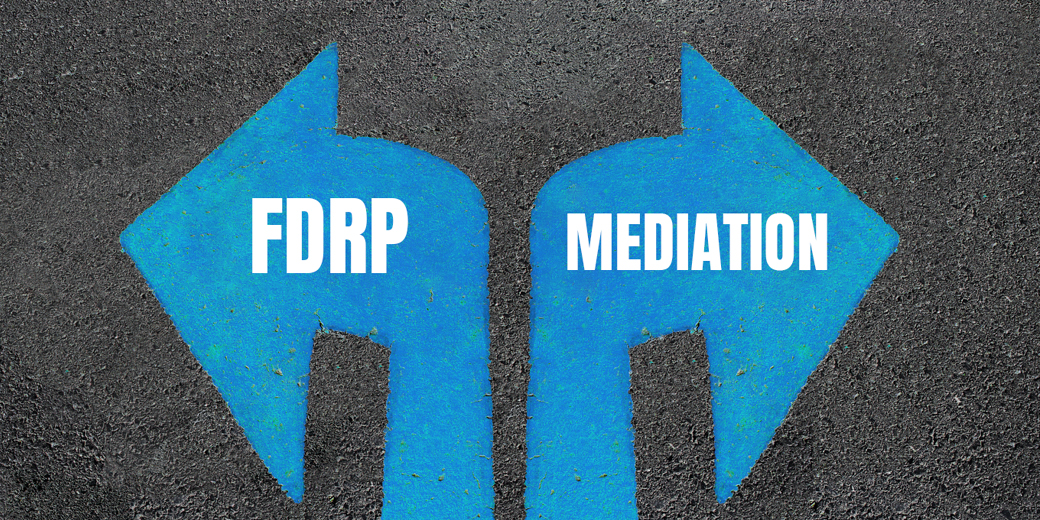
There are several different pathways available to you, each requiring specific training and experience. Here, we’ll take a closer look at two different pathways: mediation and family dispute resolution.
We sat down with Linda Kochanski, LLB, AMDRAS Honorary Leading Mediator, FDRP, Senior Practice Leader, Dispute Resolution, The College of Law
First, what is mediation?
Mediation is a process used to resolve disputes or conflicts between two or more parties.
An impartial third party – the mediator – helps the two sides communicate, negotiate and find a solution that works for everyone involved.
‘Mediation is used as an alternative to litigation in various contexts, including workplace conflicts, business disagreements and civil disputes,’ begins Linda.
‘The mediator doesn’t make decisions for the parties – they’re there to empower them to reach their own agreement by facilitating discussion, helping each other identify their concerns and assisting them in coming up with resolutions.’
Though some mediators work in law, you’ll also find them in HR, education, business, government, social work and many other fields.
So what's FDRP?
FDR stands for Family Dispute Resolution.
FDR is a more specialised form of mediation in which people in a family dispute, such as a separation or divorce, meet with a mediator to try and resolve their issues without going to court.
In this context, the mediator is called a Family Dispute Resolution Practitioner (FDRP).
‘The practitioner helps families discuss their problems, understand each other's viewpoints and develop solutions regarding parenting arrangements, money and property,’ explains Linda.
FDRPs come from a variety of backgrounds, including law, social work and psychology.
How to determine which pathway is right for you
Choosing the right path will require thorough research and careful consideration of your personal skills, passions and career goals.
Start by assessing your interests and values – the kind of impact you want to make and the environments you want to work in.
‘Are you passionate about helping families navigate challenging circumstances? Then FDRP could be the right path for you,’ says Linda. ‘In that case, you’ll need to complete FDRP training to gain a deeper understanding of family law.
‘If you’d prefer to use your mediation skills in a variety of contexts, then train as a general mediator. Mediator training will help you learn the essential mediation and conflict resolution techniques that can be applied more broadly in conflict situations.’
The length, style and cost of each training program may prove a deciding factor for you. With that in mind, let’s look at the qualifications you’ll need to get accredited in each profession.
National Mediator Accreditation Training: AMDRAS
To become an accredited mediator in Australia, you’ll need to complete mediator training and assessment under the Australian Mediator and Dispute Resolution Accreditation Standards (AMDRAS). Formerly NMAS.
‘AMDRAS is ideal for anyone wishing to add mediation to their skillset,’ explains Linda. ‘You don’t need a bachelor’s degree or any specific professional experience to apply, though some training providers have their own prerequisites for enrolment.’
During your training, you’ll learn the fundamental principles of mediation, including impartiality and confidentiality, as well as a range of conflict resolution and negotiation strategies. You’ll also explore the ethical standards and legal frameworks integral to mediation.
AMDRAS courses will help you develop practical mediation skills – usually through role-plays, simulations and case studies – with regular feedback from experienced mediators.
You can complete training with an AMDRAS Recognised Training Provider (RTP), then apply for accreditation through a Recognised Accreditation Provider.
And the course will last anywhere from a week to one semester, depending on your provider.
Once you’ve completed the AMDRAS course and passed an assessment, you’ll be eligible to become an accredited mediator. You’ll then have six months to apply. After that, your accreditation will be valid for 2 years. And it’s your responsibility to keep up your mediation practice over that period.
Visit the Australian Mediator and Dispute Resolution Accreditation Standards (AMDRAS) website to learn more about becoming a mediator.
Becoming an FDRP: Graduate Diploma of Family Dispute Resolution Practice
Though FDRPs are a kind of mediator, they need a more specialised understanding of family law and an appreciation of the nuances and complexities of family dynamics.
To become accredited as an FDRP, you’ll need to meet the Commonwealth Attorney-General’s Department’s accreditation requirements.
At the College, the main study pathways are the Graduate Diploma of Family Dispute Resolution Practice (GFDRP) or the Master of Laws (Applied Law) majoring in Family Dispute Resolution Practice (if you like to take it even further)
So, what are the prerequisites for entry into the graduate diploma?
‘You usually need a bachelor's degree in a relevant subject such as law, social work or psychology,’ explains Linda.
If that doesn’t apply to you, you can still apply for entry if you’ve completed your:
- Accreditation under the Australian Mediator and Dispute Resolution Accreditation Standards (AMDRAS). Please note that from 1 April 2025 applicants who are seeking entry into the program on the basis of NMAS/AMDRAS will need to have held this status for 2 consecutive years at the time of the application for accreditation with the Commonwealth Attorney-General’s Department following the completion of the course.
- Mediation skill set from the Community Services Training Package (CHC)
During your graduate diploma, you’ll learn the skills and techniques integral to mediation – many of which are taught in the AMDRAS course. But you’ll also delve into the theory and legislation specific to family disputes, including:
- Family law and legislation
- Child welfare and development
- Domestic violence and child safety concerns
- Cultural competency and complex family dynamics
Visit the Attorney General’s Department website to learn more about becoming an FDRP.
Weighing up your options: a quick snapshot
Take the time to familiarise yourself with the different courses and what each will require of you. Below, we’ve compiled the key features of each qualification into a handy comparison table.
|
|
Mediation |
FDRP |
|
Type of qualification |
Short course / Professional qualification |
Graduate Diploma |
|
Duration |
Training course: 5 days Assessment: 1.5 days |
Around 7-9 months |
|
Cost (at the College of Law) |
$4,190 including assessment. Discounts may apply when registering for training and assessment at the same time. |
$20,750 for the Graduate Diploma |
|
Entry |
None |
Relevant undergraduate degree or higher, AMDRAS/NMAS status held for 2 consecutive years, or Mediation skill set from the Community Services Training Package (CHC). |
|
Teaching |
Covers key theoretical concepts with practical role plays and simulations |
Examines academic theory and research in more depth |
Linda’s final word of advice
Ultimately, your decision hinges on your passions, goals and readiness for the journey ahead.
‘If you have a genuine interest in family dynamics or work in a related field, such as family law, social work or child welfare, FDRP is a natural progression,’ says Linda. ‘But if you want flexibility in how you apply your mediation skills, AMDRAS offers a broader pathway.’
Still unsure – but just want to get going?
‘Start with the AMDRAS,’ advises Linda. ‘This training lays the groundwork for FDRP work and will help you figure out whether dispute resolution is right for you. In short, AMDRAS can help you test the waters before committing to the more intensive (and expensive) FDRP program.’
Whether you opt for the versatile pathways of AMDRAS or the specialised realm of FDRP, you’re sure to find yourself in a stimulating and fulfilling career.
Ready to take the next step? Explore our mediation short courses and FDRP postgraduate programs.
Last updated June 2026








































![How to handle Direct Speech after Gan v Xie [2023] NSWCA 163](https://images4.cmp.optimizely.com/assets/Lawyer+Up+direct+speech+in+drafting+NSW+legislation+OCT232.jpg/Zz1hNDU4YzQyMjQzNzkxMWVmYjFlNGY2ODk3ZWMxNzE0Mw==)