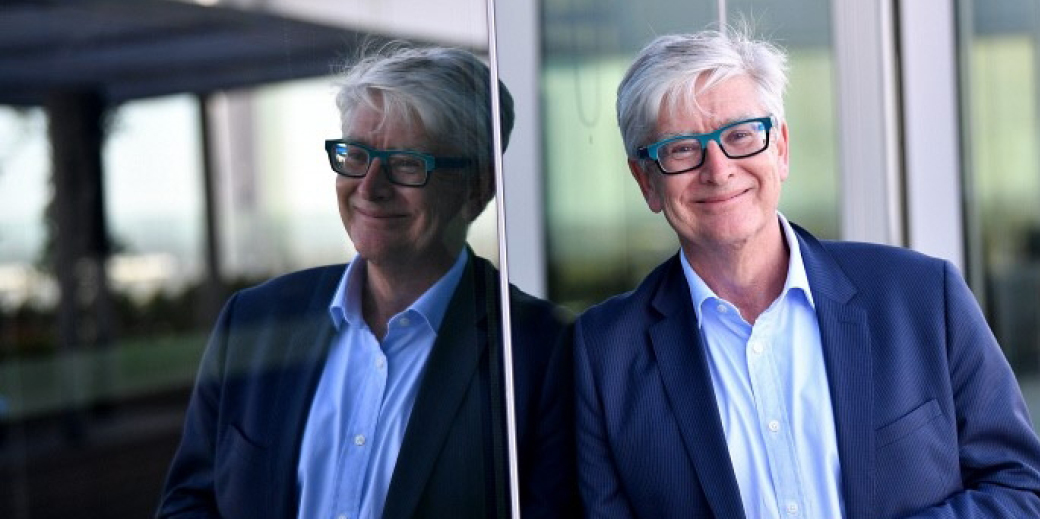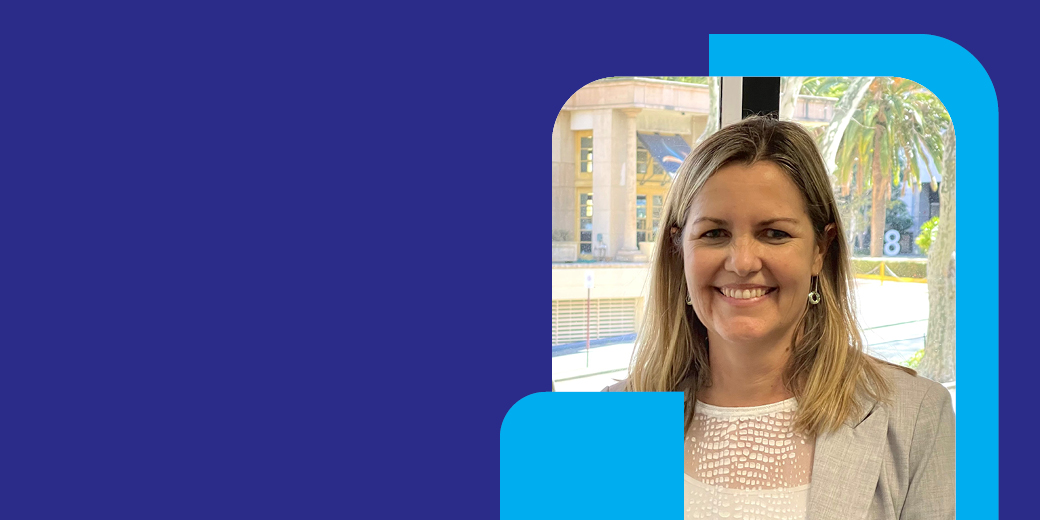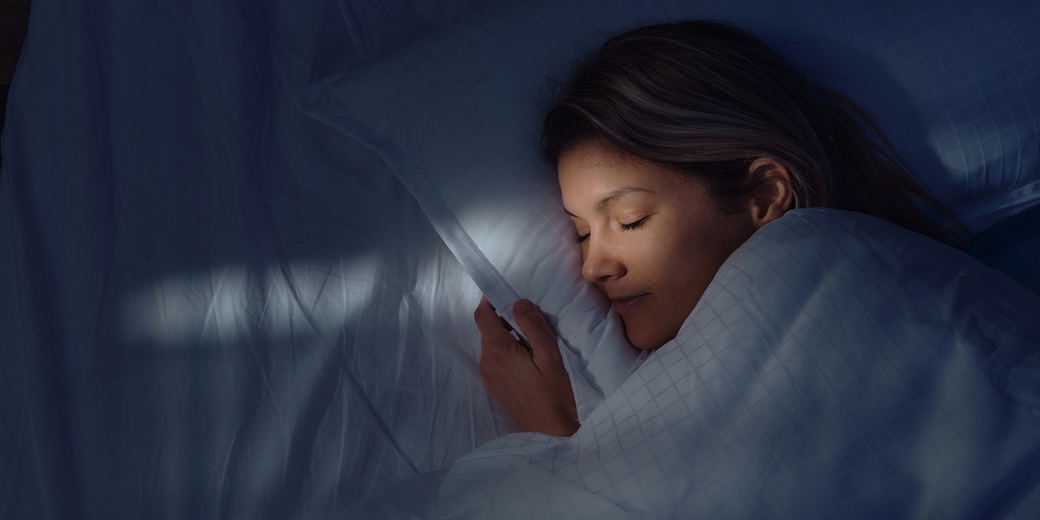
Sam Shosanya doesn't struggle to fall asleep. He struggles to stay asleep, and that, it turns out, is a very different problem.
"I never found it difficult to get to sleep. I found it difficult to stay asleep," says Shosanya, General Manager of FrontTier, the College's leadership accelerator. "And when I woke up, a whole world of things would come into my mind."
This bout of insomnia occurred during a demanding CEO role. "I ended up actually having physical manifestations of a lack of sleep, such as elevated heart rate, and even a rash." It was enough to send him looking for answers, not just about sleep, but about what it might be doing to his ability to lead.
He's far from alone. Research cited by Cadence Leadership, drawing on Christopher Barnes' work published in Harvard Business Review, found 42% of global leaders get six hours of sleep or less. What’s more troubling is that sleep-deprived leaders are more likely to be impatient, irritable, and reactive.
What Shosanya found reshaped how he now works with leaders: "I realised that most of what I wanted to do in terms of delivering as a leader was impacted either positively or negatively by sleep."
When Willpower Fails, Systems Don't.
Shosanya has been thinking a lot lately about a line from the author James Clear: organisations don't rise to the level of their goals; they fall to the level of their systems. He applies the same logic to sleep.
"To me, sleep leadership actually looks like a leader having a system that they follow," he says. A good system is built around the recognition that “you don't work late unless you absolutely have to," and that "catching up at the weekend isn't a long-term solution... it's a short-term solution to a longer-term problem."
Willpower, he points out, is a depleting resource. "Your willpower is at its highest at the start of the day. However, it declines over time. It doesn't matter how disciplined you are, you'll have less willpower at the end of the day than at the start." Which is precisely why he thinks good intentions need to be set early, "when your willpower is at its greatest.” This means that by later in the day, "you're relying on your system as opposed to your willpower to do the right thing."
It's a shift from reacting to circumstances to imposing structure on them.
Imposing a good system can occur at both the leadership and organisational level.
“Sleep leadership might mean not rewarding those extra-long hours, or emphasising productivity over recovery,” Sam says. “Sleep leadership means you go beyond saying what you regard as good behaviour; you behave differently and reward different behaviours.”
His assertions are backed by sound research. Johns Hopkins' Human Capital Development Lab found that leaders who genuinely support healthy sleep among their teams (in other words, "sleep leadership") measurably improve employee sleep quality, which in turn strengthens people's ability to pursue goals and manage impulses at work. The stakes go well beyond any one team: the same research puts the broader economic cost of insufficient sleep above $411 billion annually in the US, with individual productivity losses estimated around $1,967 per employee per year. Sleep, in other words, isn't a personal indulgence to be managed by an individual employee. Rather, it's something leadership behaviour actively shapes, for better or worse.
When You’re Too Tired to Read the Room
As we’re urged to ‘embrace the grindset’ and ‘hustle harder’, embodying good sleep leadership can seem counterintuitive.
From Sam’s perspective, moving beyond these worldviews requires you to recognise you may have a mindset problem and/or a systems problem.
The mindset version sounds like this: "I've got to be available. I always have to be available. I can sleep when I get over this hump." Or the quieter, more insidious version: "It's fine if I'm tired, but that demonstrates that I'm pushing it" – tiredness worn, he says, "like a badge of honour." Taken further, it curdles into identity: "If I'm really passionate and I'm really committed... then this is what good people do. This is how we suffer."
The systemic signals are more observable, if you know where to look: unrestricted hours, back-to-back meetings with no room to breathe, a culture that rewards hours over quality.
So what impact does exhaustion have on your judgement?
One study following 88 leaders found abusive supervision increased after a night of poor sleep, and dropped again when the same leader had a night of good-quality sleep, suggesting behaviour can shift with sleep alone. However, researchers caution the link isn't universal or guaranteed for every leader.
Sam admits this can happen to him, too. "If I have a bad enough night, then it's likely that I am going to be grumpy, and this might end up having an impact on the people I work with,” Sam says.
However, beyond being a little grumpy, there’s a broader risk.
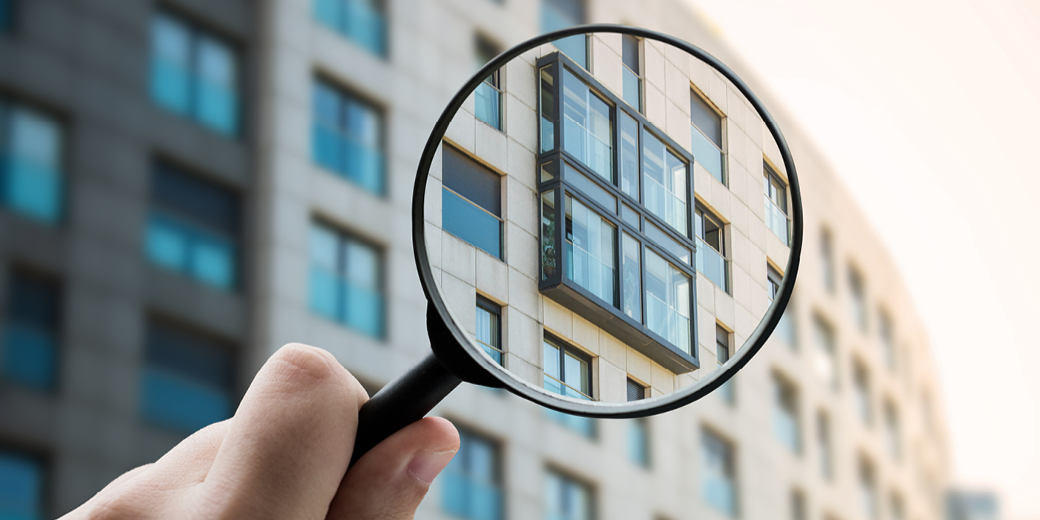
"I think the bigger issue is not being able to notice,” Sam says. "If you're tired enough, then you're looking through frosted glass, and the things that might occur to you if you were fresh just won't be seen." The problem isn't that tired leaders behave badly and know it. It's that they stop being able to see themselves behaving badly at all. "You just don't see the drift."
Indeed, feeling lost under ‘frosted glass’ is rooted in our biology. During deep sleep, the brain undergoes a cleanup process; cerebrospinal fluid floods the brain and clears toxic byproducts that build up during waking hours. Sleep deprivation can interrupt this process, and, according to UC Berkeley research, even impair your ability to read social cues, causing you to mistake friends for foes.
What If ‘More Sleep’ Isn’t an Option?
Sometimes, you simply can’t sleep more, however much you may wish to do so. In these situations, Sam suggests controlling what you can.
“Decide in advance what your minimal sleep schedule is,” he says, describing his own habit of rising at 4:30am on weekdays, which flows on to the weekend. "The first thing to do is go to bed at the same time, get up at the same time. That's a pretty good starting point."
Next, control what you can, even if you can't control duration: "If there's aspects you can reduce that impacts the quality of your sleep, such as using your phone before bedtime, how much you drink, or when you eat, do so. Do anything that might improve the quality of your sleep, even if it doesn't increase the duration."
Then, where possible, a short reset. "I often find that a nap is excellent," he says. "I try and do 20 minutes or less. This is long enough to refresh me, but short enough not to be groggy." Nap any longer and you risk sliding into deeper sleep stages, waking up groggier than before you started.
His final piece of advice loops back to the same idea. Knowing that judgement is the first casualty of exhaustion, he counsels leaders to notice their own state before wading into anything volatile: "If you're tired, or know you're tired, delay the emotionally charged tasks."
It's not a dramatic prescription. But it's consistent with everything Shosanya has learned, confirmed by research. Leaders who manage sleep well aren't relying on discipline alone. They've noticed how little they can trust their own judgement through frosted glass, and shifted their mindset and systems to help them act with clarity.